A preprint-stage note on the design logic behind synthetic xrRNAs and mechanically active RNAs.
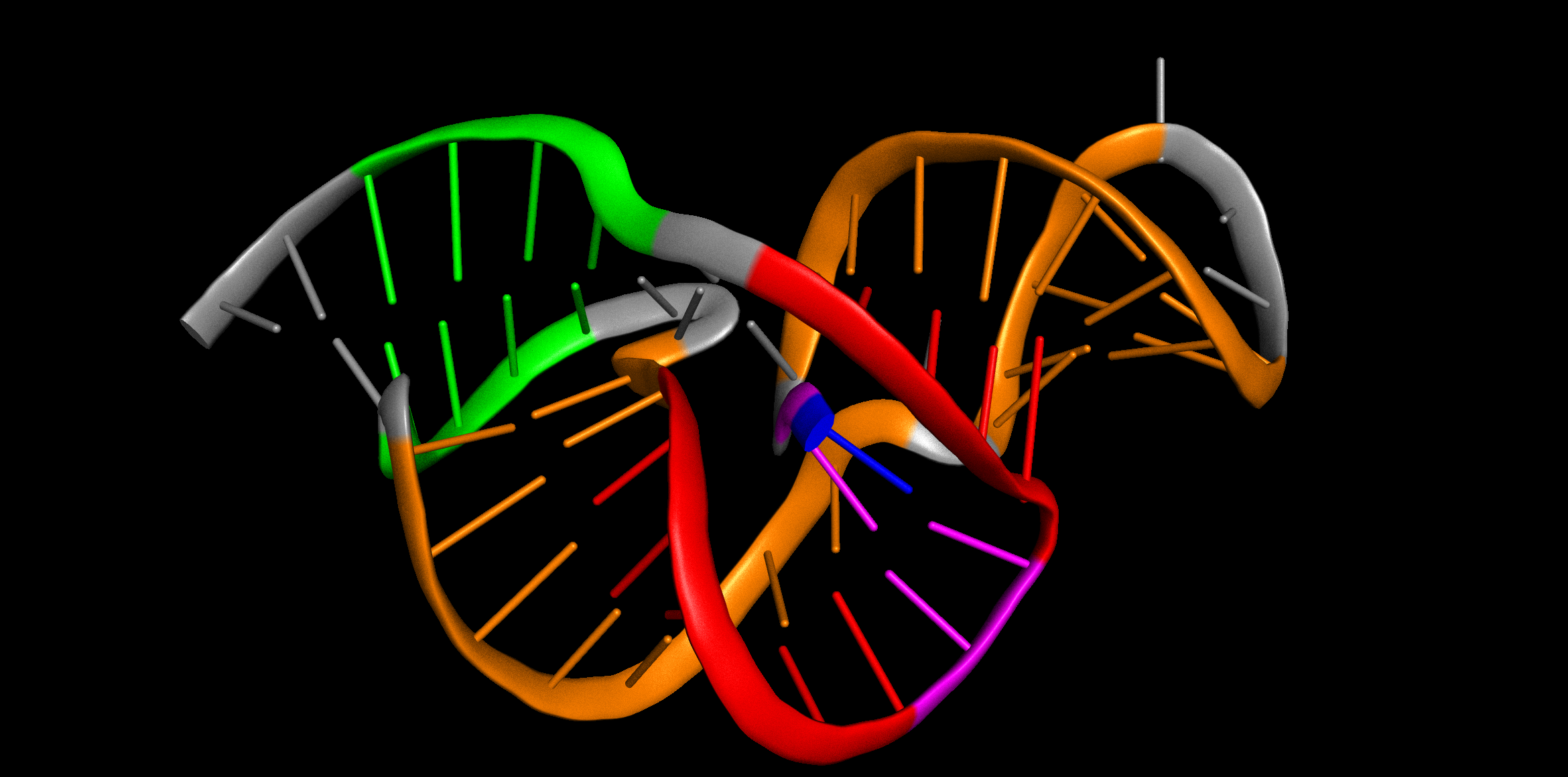
Exoribonuclease-resistant RNAs (xrRNAs) are among the clearest examples of mechanically active RNAs. Their function depends on a ring-like topology that blocks 5' to 3' decay by enzymes such as XRN1. That makes them attractive design targets, but also difficult ones, because the relevant features are not captured well by conventional secondary structure design alone.
The main interest of this work was whether that kind of function could be approached rationally. The study starts from topology rather than sequence conservation and asks which structural elements are indispensable for XRN1 resistance. In the Aroa virus xrRNA used as a benchmark, the two pseudoknots in the xrRNA do not contribute equally: pseudoknot 2 behaves as the decisive gatekeeper of mechanical resistance, whereas pseudoknot 1 is important but less determinant on its own.
Those observations were then turned into a design workflow. Natural mosquito-borne flavivirus xrRNAs were reduced to a symbolic representation that preserves the three-way junction, the two pseudoknots, and characteristic length constraints between structural elements. Sequence generation was carried out with explicit structural and topological constraints, followed by ensemble-based refinement, SimRNA modeling, and molecular dynamics screening for ring closure and directional force resistance. The point was not simply to inverse-fold a target secondary structure, but to make topology part of the design objective.
The synthetic constructs provide a useful progression. syn-xrRNA1 captured the general architecture in silico but remained too weak experimentally. syn-xrRNA2 strengthened the crucial topological region and reached wild-type-like XRN1 resistance. syn-xrRNA3 then removed most of the familiar evolutionary sequence signal while preserving the geometric and energetic requirements for function. Even in that reduced form, the construct still folded into a bona fidae xrRNA architecture and stalled XRN1 efficiently.
The main conceptual result of the preprint is the following: mechanical RNA function could be approached through topology and geometry without relying on obvious sequence ancestry. The broader implications for synthetic biology and transcript engineering are better discussed in the forthcoming publication post, once the peer-reviewed paper is available in final form. Rational design of mechanically active RNAs: de novo engineering of functional exoribonuclease-resistant RNAsCitation
Jule Walter, Leonhard Sidl, Katrin Gutenbrunner, Denis Skibinski, Tim Kolberg, Ivo L. Hofacker, Hua-Ting Yao, Mario Mörl, Michael T. Wolfinger
bioRxiv 2026.01.08.698366 (2026) | doi:10.64898/2026.01.08.698366 | Preprint PDF